The History of Boturnell Farm
This is the history of Boturnell Farm, as we have discovered. Some has taken a leap of faith, or our interpretation of the documents available. We hope you find this as interesting as we have compiling it.
800BC -09AD Early Iron Age to Romano British 800BC to 409 AD The field was called Roundy Park which suggests a round or barrow, but there is no evidence left.
1066 and all that
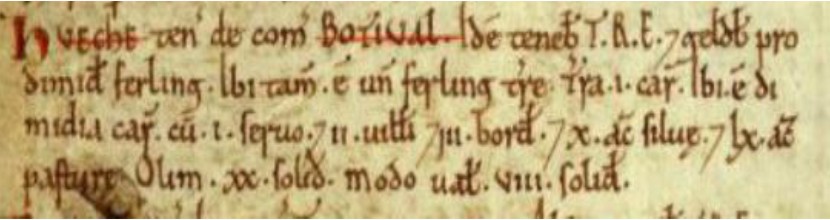
1086 The Doomsday Book According to the National Archives this translates to Boduel, but I will let you make your own mind up!
1086 there was an Odo of Botelet
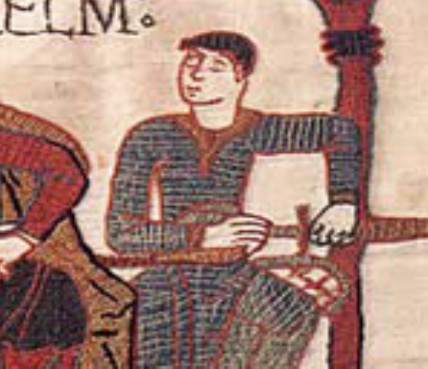
After the Norman invasion, William rewarded his loyal supporters with the gift of lands. Robert Count of Mortain and Williams half brother was given 797 manors, including most of Cornwall. He is considered by many as the first earl of Cornwall but did not have the title
Botelet was mentioned in the Domesday Book (AD 1086) and at that time was called ‘Botiled’, belonging to the Count of Mortain. The name Botiled is thought to be derived from the Cornish ‘Bot’ meaning homestead and ‘Iled’ being the person that lived there. In the 13th century Botelet Manor was home to Sir William de Botreaux, clerk of the first Duke of Cornwall, the Black Prince.
Reginald Earl of Cornwall and the Calendar of Launceston Priory
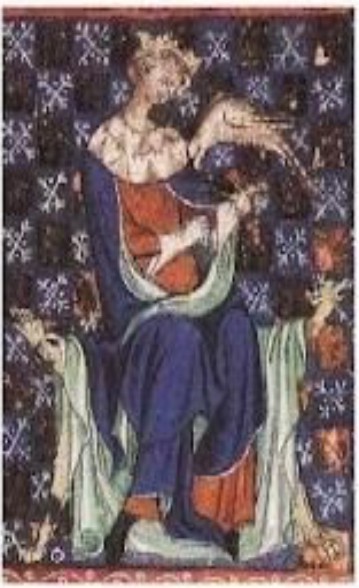
Reginald de Dunstanville (c. 1110 1 July 1175) (alias Reginald FitzRoy, Reginald FitzHenry, Rainald, etc., French: Renaud de Donstanville or de Dénestanville was an Anglo-Norman nobleman and an illegitimate son of King Henry I (1100 – 1135). He became Earl of Cornwall and High Sheriff of Devon.Around 1170 he gave it to the Austin canons of his new foundation of Launceston Priory. This was on condition that perpetual prayers and masses were said in the Priory for the souls of Reginald himself, King Henry his father, the Empress Matilda (his half-sister) and her son, the reigning king, Henry II.
1244 The Earl grants land to the canons of St Stephen of Launceston from Gunnecumbe along the ditch as far as the great street which came from Botternell and went to Redderise, now called RedPost.
1209 Luke, son of Bernard grants alms to the priory the land which Martin Augustin & Chubba the carpenter held in the vill of Botternell which Luke held before the priory.
Final concord made in 1244 between Bernard son of Roger petitioner and Henry, prior of Launceston, tenant, of one acre of land in Botternell. Bernard renounced his claim, and the prior paid him 4 marks 1397-8 Various grants of land in the vill of Botternell.
1300’s
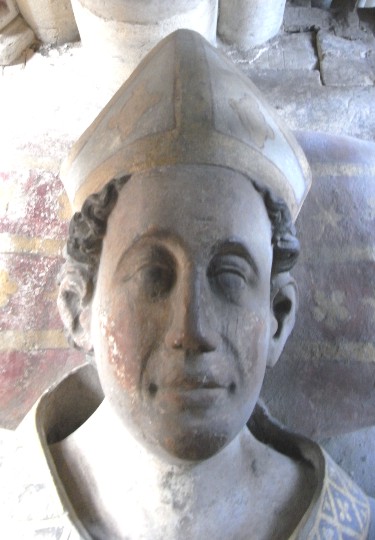
1310/11 Simon de Botornel is shown on the register of the Bishop of Exeter, Bishop Stapledon
1323
This appears to be the first public record of the place then spelt “Botturnel” in the Assize/Plea Roll
. 
Plea rolls are parchment rolls recording details of legal suits or actions in a court of law in England. Courts began recording their proceedings in plea rolls and filing writs from their foundation at the end of the 12th century.
William Botreaux
1066
William I, in recognition of the important role his half brother Robert, Count of Mortain, gave him considerable lands in England. However the greatest concentration of his landed wealth was in Cornwall where he held 248 manors at the time of the compilation of the Domesday Book, together with the castles of Launceston and Trematon.
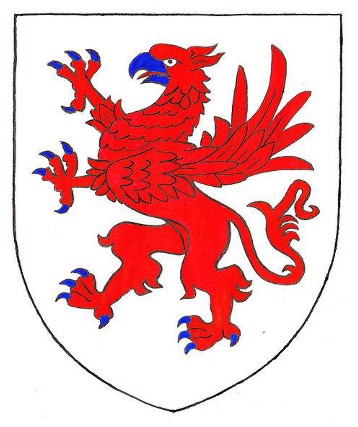
It appears that Robert, in turn, leased out some of his land to William Botreaux sometimes known as Boterel. He lived at Boscastle, anciently Bottreaux Castle, Cornish: Kastell Boterel. He also had many transaction with Launceston Priory, with regard to land. Near Launcestoon, you will find North and South Boturnell. Our Boturnell is sometimes described as West Boturnell. Logic would guess that William held all three.
1377
9 generations later, Sir William de Botreaux was born at Botelet in 1337, about 5 miles from here. During the reign of King Edward III he was first summoned to parliament by writ addressed to Willelmo de Botreaux on 24th February 1367/8. He thus became the 1st Baron Botreaux. He was likewise summoned on several further occasions the last of which was 12th September 1390.
Richard of Boturnell
1400
Richard of Boturnell is thought to have born around this date. He appears to have been a bit of a character.
1409-10
Richard and a chap called John Swety as debtors are brought before the court for owing Richard Rosprenna £14 for merchandise brought from him.
1442- 1483
At the court of Edward, once again he is embroiled in a dispute between Sir Walter Molye and John Moyle for the recovery of family title deeds.
1481-1483
The petitioner this time is the John Harry, reeve of the prince’s manor of Liskeard. Harry claims :-
“ that he attached 2 horses of Boturnell in Trevelmond for the many trespasses that they had done in the corn and grass of that ground,and would have led them to the prince’s pound but Richard Boturnell, Thomas Fox and Thomas Ludegarde with force and arms took the horses from him, and beat and chased him whereby he was put in fear of his life. Harry requests that Boturnell, Fox and Ludegarde are called before them to answer the premises and to set such direction as shall be considered reasonable”
1449
Richard marries his only child Jane, born 1432, to Simon Kestell. Simon is the fourth son of John Kestell and his wife Johanne, daughter of Nicholas Godolphin. Simon can trace his ancestors back 8 generations in the village of Kestell and Manacan, but as the fourth son probably did not have good prospects. His mother can be traced back 11 generations, having made a fortune out of mining.
The Kestells
With Simon & Jane, Boturnell is the guardianship of at least 6 generations of Kestells.
Noteworthy Kestell mentions:-
William Kestell is charged Roger Knolle, of Brodelake, husbandman; Alice, his wife with trespass.
1532-38 John Kestell is involved in various cases pertaining to the retention of deeds.
1538-45 Thomas KESTELL, yeoman, son and heir of John Kestell, v. William PEKYN.: Messuage and land in St. Pinnock, formerly of John Treworgy.: CORNWALL. Many of you will know Tiflex is at Treworgy.
1550 The Pray Book Rebellion Sir John Arundell is sent to the tower on information received from Kestell who was Sir William Godolphin’s man
1555 Duchy officials appoint sole controller of the coinage of tin despite the fact that Sir William Godophin was already in post. There was a disturbance at Coinage Hall when Isham tried to claim his post and John Nance was said to have attacked Thomas Kestell with a dagger despite both being on the same side, maybe settling an old score!
1569 William Kestell is on the muster roll as having to provide an able archer, bow, a quiver usually contained 24 arrows and a scull a close fitting brimless helmet
1571 William marries Alice of Edgcombe.
1599 their daughter Jane marries a Edward Coode and had 5 children, whilst remaining at Boturnell. On the same wall, but beneath the window, is a slate which appears to have been the top of a table tomb, the inscription being to Edward Coode of Treesa who died in 1662 aged 63.
1606 William Grosse of St Pinnock mentions Botborough in his will, which was inherited by his son Edward (more of him later)
1643 William dies, and is survived by Thomas.
1657 mortgage deed between John Kestell & Thomas Kestell.
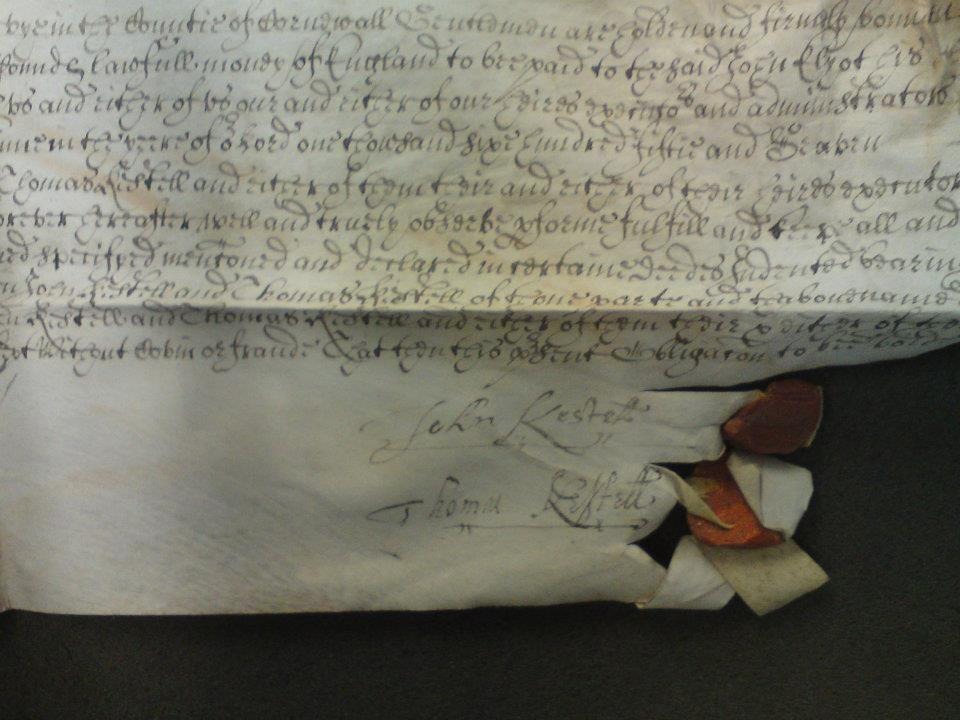
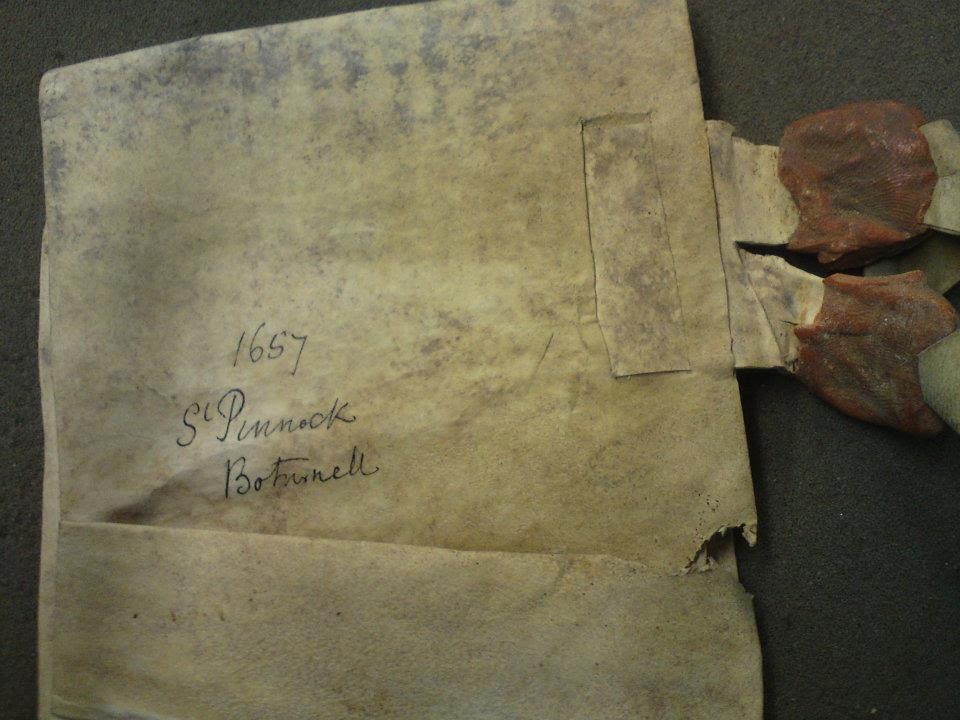
1620 Thomas Kestell A List of Persons Who Were Disclaimed as Gentlemen of Coat-Armour by the Heralds at the Visitations of the Various Counties of England
Thomas appears to be the last male in this line.
1652 William Foote I bequeath to my wife Margaret two of my best chests, a dozen of pewter dishes of the best sort, my brewing kettle, my best riding nag or mare, the side saddle with its furniture, half a dozen of silver spoons, my little silver cup gilded, two of my best cows, etc. and £10, on condition she give security for the payment of £70 to my brother Mr. Simon Foot and our cousin Mr. William Symons (whom I make my executors) within 3 months after her marriage with any other person. I give her more one bedstead which now standeth over the hall at Boturnell
1664 there is a final concord between John Cowlinge gent & Edward Grosse. Part of the agreement was West Boturnell. However, a final concord can be the product of a ‘collusive action’, or a fake legal procedure. John was a gent from Liskeard & Edward resided in Truro, but his family was from St Pinnock.
1679 John Manley marries Edwards daughter Anne, an heiress with substantial property, including the advowson of St Pinnock. Manley was a prominent MP, who possibly committed bigamy by marrying his cousin and then deserted her. On 12 November 1696, he was imprisoned in the Tower of London after criticizing the government, he was later released after a petition In January 1707, he fought a duel with Thomas Dodson in Westminster and Dodson later died of his wounds. In 1708, he was re-elected for Camelford but appears to be inactive.